
What Is a Timing Belt and When Should It Be Changed?
Your car's engine relies on several components working together at exactly the right time. One of the most important is the timing belt, which plays a vital role in keeping the engine running smoothly. But what exactly does it do, how do you know when it needs replacing and what happens if it breaks?
At Sandicliffe, we know that understanding your vehicle's maintenance requirements can help you avoid unexpected repair bills. Here's everything you need to know about timing belts, when they should be changed and why keeping up with this maintenance is so important.
What Is a Timing Belt?
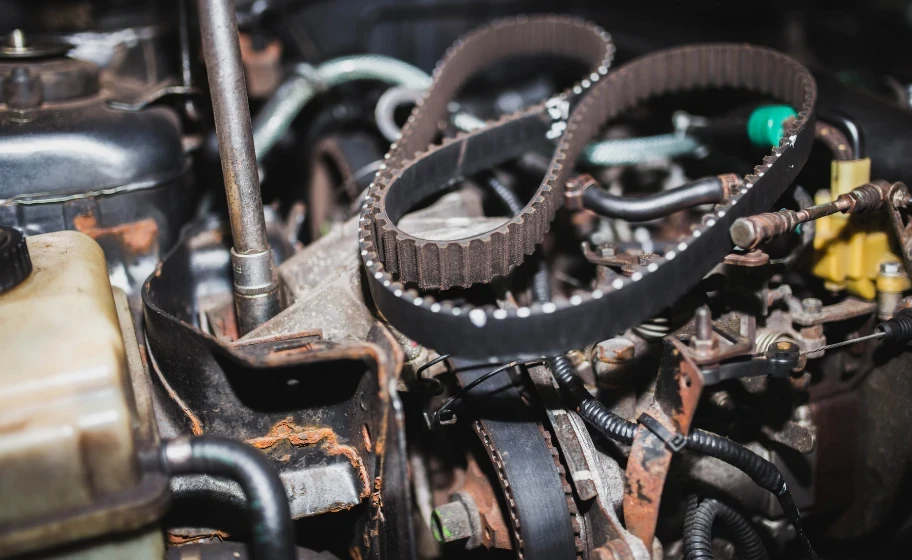
A timing belt is a reinforced rubber belt that synchronises the movement of important components inside your engine.
Its main job is to coordinate the rotation of the crankshaft and camshaft. This ensures the engine's valves open and close at the correct time in relation to the movement of the pistons.
This precise timing is essential for the engine to operate properly. If the belt slips or breaks, the timing can be disrupted, potentially causing serious internal damage.
Not every car uses a timing belt. Some engines use a timing chain instead, which performs the same fundamental job but has a different design and maintenance requirements.
What Does a Timing Belt Actually Do?
To understand why the timing belt matters, it helps to know a little about how an engine works.
The pistons move up and down inside the engine cylinders, while the valves control the flow of air and fuel into the engine and exhaust gases out.
The crankshaft converts the pistons' movement into rotation, while the camshaft controls the opening and closing of the valves.
The timing belt keeps these components synchronised so everything happens in the correct sequence.
If the timing belt fails, the crankshaft and camshaft may no longer move in sync. In many engines, this can cause the pistons to collide with open valves, resulting in extensive and expensive damage.
When Should a Timing Belt Be Changed?
There is no single replacement interval that applies to every car. The recommended timing belt replacement schedule depends on the manufacturer's specifications, engine design and vehicle usage.
Manufacturers generally provide an interval based on mileage, age or both. For example, a vehicle might require a replacement after a specified number of miles or a certain number of years, whichever comes first.
Even if you do not drive particularly often, the belt can deteriorate over time. Rubber components are affected by age, heat and general wear, so low mileage does not necessarily mean the belt is still in good condition.
The best way to find out when your timing belt needs changing is to:
Check your vehicle handbook or manufacturer's maintenance schedule.
Review your service history to see when it was last replaced.
Ask a qualified technician to confirm the correct interval for your engine.
Check whether the replacement interval has changed due to updated manufacturer guidance.
If you have recently purchased a used car and cannot confirm when the timing belt was last replaced, it is worth investigating rather than assuming it is still within its service life.
What Are the Signs of a Worn Timing Belt?
One of the challenges with timing belts is that they do not always show obvious warning signs before failing. A belt can deteriorate internally without producing noticeable symptoms.
However, there are some potential signs that may indicate a problem:
Unusual ticking or rattling noises: A damaged or incorrectly tensioned timing belt system may produce unusual noises, although these can also come from other engine components.
Difficulty starting: If the timing belt has slipped and the engine timing is no longer correct, starting problems may occur.
Engine misfires: Incorrect timing can affect the engine's combustion process, potentially causing rough running or misfires.
Visible belt damage: If the belt is accessible for inspection, signs such as cracking, fraying or missing teeth may indicate deterioration.
These symptoms do not necessarily mean the timing belt is at fault. More importantly, a timing belt can fail without giving you any warning, which is why following the replacement schedule is essential.
What Happens If a Timing Belt Breaks?
A broken timing belt can have serious consequences, depending on the engine design.
In many modern engines, the pistons and valves occupy overlapping space within the cylinders at different points in the engine cycle. The timing belt ensures they never move into that space at the same time.
If the belt breaks, the components can lose synchronisation. This may allow the pistons to strike the valves, potentially bending them and damaging other internal engine components.
Repairs can involve removing or dismantling significant parts of the engine, making the work expensive. In particularly severe cases, the engine may need replacing.
Some engines are designed so that a broken timing belt is less likely to cause this type of internal collision, but failure can still leave the vehicle unable to run.
If you suspect your timing belt has broken, stop the engine and do not attempt to restart it. Arrange professional assistance.
Should You Replace the Water Pump at the Same Time?
On some engines, the water pump is driven by the timing belt. Because accessing the water pump may involve much of the same labour required for timing belt replacement, replacing both at the same time can be worthwhile.
It can help avoid paying for similar labour again if the water pump needs replacing shortly after the new belt is fitted.
However, this depends on the vehicle's design and the manufacturer's recommendations. Some water pumps are driven separately, and replacement may not be necessary during every timing belt change.
A technician can advise whether it makes sense to replace the water pump, tensioners and associated components as part of the same job.
How Much Does a Timing Belt Replacement Cost?
The cost of replacing a timing belt varies significantly depending on the vehicle, engine design and labour involved.
Some engines are relatively straightforward to work on, while others require considerably more dismantling to access the timing belt.
The total price may also depend on whether the replacement includes:
The timing belt itself.
Tensioners and idler pulleys.
The water pump, where appropriate.
Associated seals and other components.
Coolant replacement, if required as part of the work.
When comparing quotes, check exactly what is included. A cheaper replacement that only covers the belt may not offer the same value as a complete kit where additional components are due for replacement.
Summary: What Is a Timing Belt and When Should It Be Changed?
A timing belt synchronises the crankshaft and camshaft, ensuring your engine's pistons and valves operate in the correct sequence. Because a failure can cause serious engine damage, it is important to follow the manufacturer's recommended replacement interval, based on both age and mileage. If you are unsure when your timing belt is due, check your service history and visit your local Sandicliffe dealership for advice on your vehicle's maintenance requirements.











Ford Transit Custom
Transit Custom V710 Limited Van 300 L1 2.0L EcoBlue 136PS FWD 8 Speed Automatic
- 2024
- 15,703 miles
- Diesel
- Automatic

Kia Picanto
Picanto 1.0 2 5dr Hatchback
- 2024
- 14,081 miles
- Petrol
- Manual
Nissan Qashqai
Qashqai 1.3 DiG-T MH 158 N-Connecta 5dr Xtronic Hatchback
- 2023
- 38,021 miles
- Petrol
- Automatic

Ford Kuga
Kuga ST-Line X 5 door 2.5L Duratec PHEV 243PS FWD CVT Automatic
- 2026
- 1,634 miles
- Automatic

Kia Stonic
Stonic 1.0T GDi 99 2 5dr Estate
- 2023
- 32,888 miles
- Petrol
- Manual