

Cars With 3 Isofix Points In The Back: Best Options For Families In 2026
Selecting a vehicle with three or more Isofix points in the rear is essential for families prioritising child safety and flexibility. This comparison provides a technical overview of the leading options available in 2026, focusing on practicality, efficiency, and value.
By reading this article, users will understand the key benefits and limitations of each model, including technical specifications and real-world usability. This enables informed decision-making when choosing the best Isofix-equipped family car for UK roads.
Comparison table of the best Isofix-equipped Family Transporters
Model | Advantages | Average Rating | Average Price |
Four Isofix anchorages, extensive EV range, advanced technology, spacious seven-seater | 8.5 | £64,995 | |
Four Isofix anchorages, rapid charging, distinctive styling, adult-friendly third row | 8.3 | £64,995 | |
Five Isofix anchorages, robust diesel engine, premium interior, off-road capability | 8.7 | £64,810 | |
Three Isofix anchorages, plug-in hybrid option, luxury features, strong performance | 8.4 | £72,400 | |
Three Isofix anchorages, highly practical, affordable entry price, efficient engines | 8.0 | £20,816 |
Leading Isofix-compatible Family Vehicles
This section offers a detailed technical analysis of the foremost people carriers featuring three or more Isofix anchorage points in the rear. Each model is assessed according to objective criteria, including child seat accommodation, efficiency, practicality, and running costs, enabling families to identify the most appropriate solution for their requirements.
Hyundai Ioniq 9
The Hyundai Ioniq 9 is a substantial, all-electric SUV designed to seat up to seven across three rows. It is distinguished by its four Isofix child seat anchorages, distributed across the second and third rows, making it especially suitable for families with several young children. The interior boasts a panoramic curved display, floating dashboard, and optional relaxation seats. Boot space measures 338 litres with all seats in place, expanding to 2,419 litres when folded. The 110.3 kWh battery provides a WLTP range of up to 385 miles (Long-Range RWD) and supports ultra-fast charging. Pricing begins at approximately £64,995.
Pros:
- Four Isofix anchorages across the rear rows, allowing maximum flexibility for child seat installation.
- Generous interior space with configurable seating for seven.
- Impressive electric range (up to 385 miles WLTP) and rapid charging (10-80% in 24 minutes).
- Advanced technology, including a panoramic display and digital key.
Cons:
- Large exterior size may pose challenges in urban environments.
- Real-world range for AWD variants is below official figures.
- Infotainment system may be complex for some users.
Kia EV9
The Kia EV9 is another sizeable, all-electric SUV based on the E-GMP platform, featuring four Isofix anchorages and a genuinely usable third row. The cabin is spacious, with a boot capacity of 333 litres (all seats in use) and up to 2,318 litres with seats folded. The 99.8 kWh battery offers a WLTP range of up to 349 miles (RWD) and 313 miles (AWD), with ultra-fast charging (10-80% in 24 minutes). Prices start at £64,995.
Pros:
- Four Isofix anchorages, including compatibility in the third row.
- Rapid charging and competitive electric range.
- Distinctive, contemporary exterior styling.
- Comprehensive standard equipment, such as heat pump and ventilated seats.
Cons:
- Large dimensions may be less suited to narrower UK roads.
- Some interior materials fall short of premium expectations.
- Ride quality can be unsettled at higher speeds.
Land Rover Discovery
The Land Rover Discovery is a versatile seven-seat SUV, notable for offering five Isofix mounting points the highest in this comparison. It is powered by a robust 3.0-litre mild-hybrid diesel engine (D350), features a premium cabin, and delivers strong off-road performance. Boot space is 750 litres with the third row folded. Pricing commences at £64,810.
Pros:
- Five Isofix anchorages, maximising child seat installation possibilities.
- Strong diesel performance and impressive towing capacity (3,500 kg).
- High-quality, practical interior with generous boot space.
- Excellent off-road ability and premium comfort.
Cons:
- Only available with diesel engines, which may not appeal to those seeking electrified options.
- Boot space with all seven seats in use is less than some rivals.
- Higher running costs associated with diesel powertrains.
Audi Q7
The Audi Q7 is a premium seven-seat SUV, offering three separate Isofix anchorages on the second row, each on an individual seat. Engine choices include petrol, diesel, and a plug-in hybrid, with the PHEV variant providing a claimed electric range of up to 51 miles. Boot capacity stands at 780 litres in five-seat mode. Prices begin at £72,400.
Pros:
- Three individual Isofix anchorages on the second row for optimal flexibility.
- Plug-in hybrid option for reduced fuel consumption and lower emissions.
- Spacious, luxurious cabin with advanced infotainment and safety systems.
- Strong performance, particularly in higher-powered models.
Cons:
- High entry price, with additional costs for optional extras.
- Real-world electric range for the PHEV is less than official figures.
- Can become expensive at higher specification levels.
Citroën Berlingo
The Citroën Berlingo is a practical MPV with van-derived underpinnings, available in five or seven-seat layouts. All versions are equipped with three Isofix anchorages on the second row, complemented by a spacious, flexible interior and sliding rear doors for ease of access. Engine options include efficient diesels and a fully electric ë-Berlingo with a WLTP range of up to 213 miles. Prices start from £20,816 for the petrol variant.
Pros:
- Three Isofix anchorages on the second row across all models.
- Highly practical interior with up to 3,500 litres of boot space.
- Sliding doors enhance access in confined spaces.
- Affordable entry price and efficient engine choices, including a zero-emission electric model.
Cons:
- Van-based styling may not appeal to all tastes.
- Central Isofix position may require slimline child seats.
- Electric version's range may be restrictive for frequent long-distance travel.
The best Cars with Isofix
In summary, the best car for families seeking three or more Isofix points in the back depends on individual priorities. The Land Rover Discovery stands out for its five Isofix points and versatility, while the Hyundai Ioniq 9 and Kia EV9 offer advanced electric mobility with four Isofix points each. The Audi Q7 provides luxury and a plug-in hybrid option, and the Citroen Berlingo delivers exceptional practicality at a lower price point. For tailored advice on selecting the ideal Isofix-equipped vehicle for your needs, contact the Sandicliffe team for expert guidance.
Latest Offers





Recently Added Stock
Nissan Micra
Micra 1.0 Acenta 5dr Hatchback
- 2017
- 39,271 miles
- Petrol
- Manual
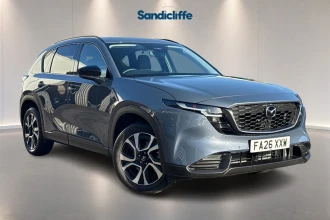
Mazda CX-5
Cx-5 2.5 e-Skyactiv G MHEV Exclusive-Line 5dr Auto Estate
- 2026
- 4,001 miles
- Petrol
- Automatic

Mercedes-Benz C Class
C Class C300 Sport 4dr 9G-Tronic Saloon
- 2019
- 57,864 miles
- Petrol
- Automatic
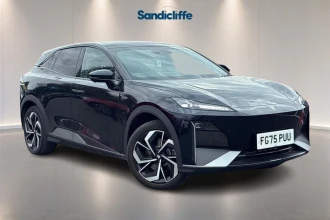
Changan Deepal S07
Deepal S07 160kW Ultra 80kWh 5dr Auto Estate
- 2025
- 9,899 miles
- Electric
- Automatic
Peugeot 208
208 1.2 PureTech 100 GT Line 5dr Hatchback
- 2020
- 32,987 miles
- Petrol
- Manual
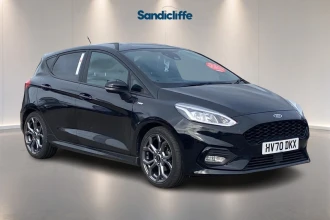
Ford Fiesta
Fiesta 1.0 L EcoBoost ST-Line Edition 5dr 6Spd 95PS
- 2020
- 48,441 miles
- Petrol
- Manual
Renault Captur
Captur 1.0 TCE 100 Iconic 5dr Hatchback
- 2020
- 26,000 miles
- Petrol
- Manual


